Dub
Dub manages branded short links, QR codes and conversion attribution, with custom domains, detailed analytics and a technically demanding self hosted deployment
Overview
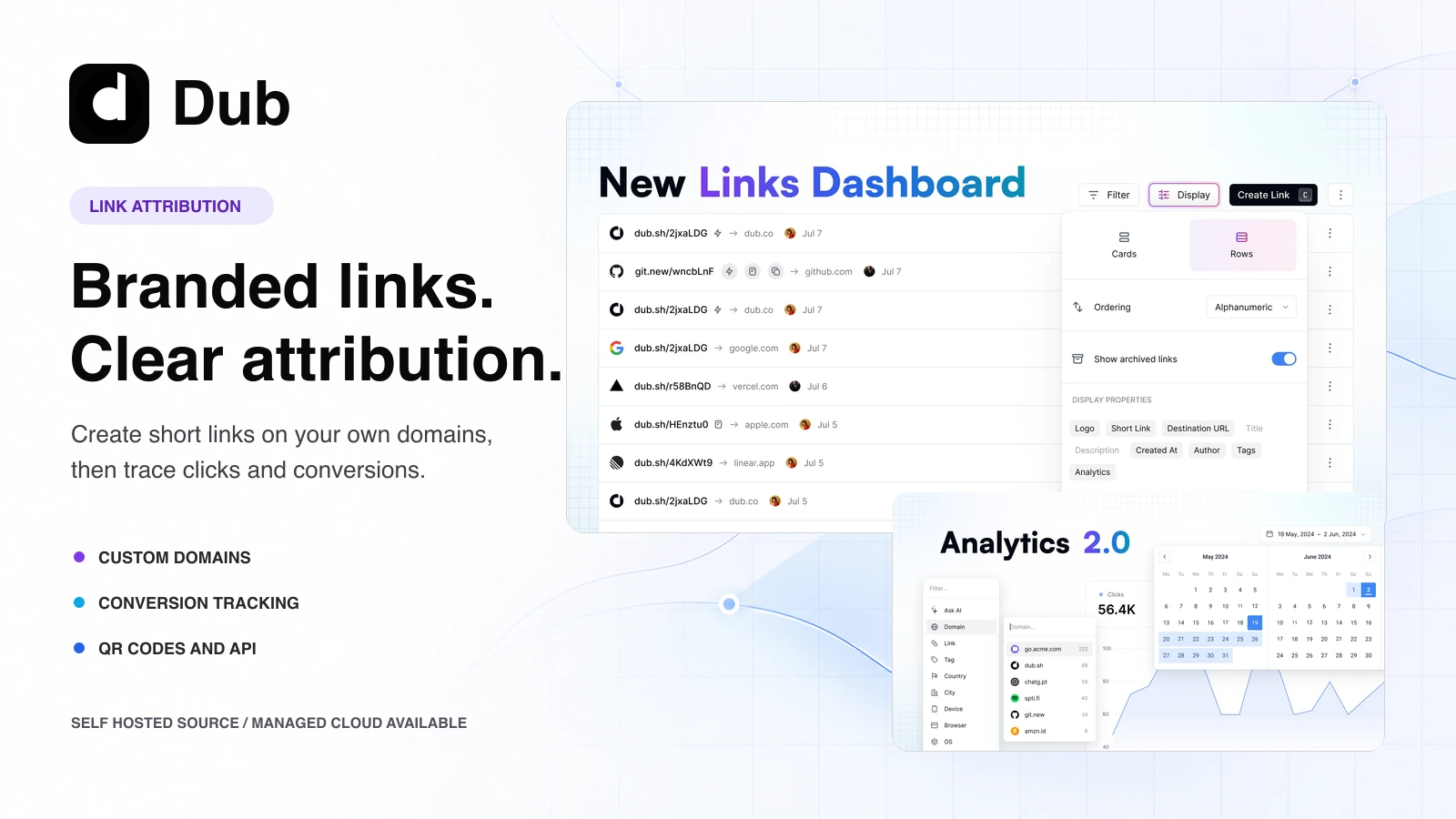
Dub is a link management and attribution platform for creating branded short links, tracking conversions and understanding where traffic originates. You can connect custom domains, organize links with tags and folders, generate QR codes and update destinations without changing the published short URL.
The dashboard records clicks, referrers, locations, devices and browsers. Conversion tracking connects those visits with signups or purchases, while the API and webhooks support automated campaign workflows. Custom domains and detailed attribution make Dub more suitable for marketing teams and online businesses than a basic URL shortener.
Dub provides its source code, but self hosting requires substantial technical work. The official deployment currently depends on Vercel, Tinybird, Upstash, a compatible MySQL service and S3 compatible object storage. Docker is not officially supported, and the installation is not a fully local stack. You must manage several external accounts, credentials and possible infrastructure charges.
Most of the repository uses AGPLv3, while two enterprise directories have separate licensing terms. The managed service has a usable free plan and paid plans for greater usage, longer analytics retention and business features. Self hosting gives experienced teams more control, but simpler alternatives such as Shlink or Kutt are easier to run on a conventional server.
Dub: Pros & Cons
| Pros (The Wins) | Cons (The Friction) |
|---|---|
| Link management: Custom domains, tags and folders. Destinations remain editable. | Deployment: No official Docker support. Several services are required. |
| Attribution: Tracks clicks and conversions. Includes detailed traffic filters. | Infrastructure: Not a fully local stack. External costs may apply. |
| Developer access: Provides an API and webhooks. Repository is actively maintained. | Licensing: Some enterprise directories use separate terms. |
Use Cases
Specific ways to use Dub for your workflow.
Deployment Strategy
Recommended ways to host Dub in your own environment.